Selecting roof sheeting is less about picking a material and more about choosing a complete roof system that suits your building, environment, and maintenance capability. Use this guide to make a defensible choice, write a clearer specification, and reduce avoidable defects around drainage, interfaces, and safe access.
How to Choose Industrial Roof Sheeting
If your roof is pitched or low-pitched and you want a lightweight, fast-to-install system, metal sheeting systems are often the default. If you need robust, non-metal profiled sheets and can manage handling/fragility risks, fibre cement may fit. If your roof is flat or very low-slope, bituminous (felt/bitumen membrane) systems are typically considered instead of “sheeting”.
Before deciding, confirm slope, structural capacity, corrosion environment, fire performance evidence, and how you will safely access and maintain the roof.
Quick decision rules
- Flat roof (or near-flat): Start with a membrane system (bituminous or other flat-roof waterproofing). Prioritise drainage design, detailing at penetrations, and moisture control.
- Pitched / low-pitch industrial roof: Start with metal roof systems (single skin, built-up, or insulated composite panels), then test against corrosion and fire requirements.
- High fragility risk or unknown roof condition: Treat the roof as fragile until a competent person confirms otherwise, and plan inspection/works accordingly.
What to Confirm First: Roof Type, Slope, Structure and Site Constraints
The “right” sheeting depends on roof form, structural support, and what the roof must do (and what you can safely maintain). Confirm the basics first, then compare options.
Roof type and system type
- Pitched roofs: Often use profiled metal sheets, insulated composite panels, or fibre cement profiled sheets.
- Flat roofs: Commonly use membranes (bituminous felt/bitumen membranes, single-ply, liquid-applied), sometimes with green roof build-ups above.
- Green roofs: Typically rely on a flat-roof waterproofing system with additional layers (root barrier, drainage layer, growing medium). Sheeting alone is not the waterproofing strategy.
Structure, loading and spans
Sheeting choices affect dead load, wind uplift behaviour, and how loads transfer into purlins, rafters and supports. Any change of roof build-up should be checked by a competent designer/engineer where required, particularly on older buildings or where adding insulation, PV, plant, or a green roof.
Site constraints that change the answer
- Corrosion environment: Coastal, heavy industry, or high humidity drives finish and fastener choices for metal systems.
- Access: Do you have safe permanent access (walkways, edge protection) or will every visit require temporary access equipment?
- Penetrations and plant: The more rooflights, vents, ducts and supports you have, the more the choice depends on detailing quality and maintenance access.
- Existing roof condition: Leaks, rust, cracking, widespread patch repairs, or persistent ponding can push you towards refurbishment rather than overlay.
Metal Roof Sheeting Systems (Single-Skin, Built-Up, Insulated Panels)
Metal roofing is usually specified as a system (not just a sheet): single-skin over purlins, built-up with separate liner/insulation, or insulated composite panels. The right choice depends on condensation risk, thermal needs, corrosion exposure and how you will detail interfaces.
Decision criteria: metal roof systems
When it fits
- Pitched/low-pitch industrial buildings where lightweight construction and long sheet lengths help reduce joints.
- Projects where you need predictable factory-made components (especially insulated composite panels).
- Sites that can control corrosion risk through correct coating specification and compatible fixings.
When it doesn’t
- Highly corrosive environments without a suitable coating/fastener strategy.
- Roofs with complex geometry and heavy penetration density, where detailing becomes the dominant risk.
- Where safe maintenance access cannot be provided, the roof is likely to be treated as fragile in practice.
Risks to control
- Corrosion: Match sheet coating, cut-edge protection, and fasteners to the environment.
- Condensation: Avoid “cold spots” and uncontrolled air leakage at laps and interfaces; include appropriate vapour control where needed.
- Wind uplift: Fixing type, spacing, and edge/corner zones matters; ensure the system is designed for site wind loads.
- Interface leakage: Flashings, ridge/eaves details, rooflights and penetrations are common leak origins.
What to check/specify
- System type (single skin /built-up/insulated panel), sheet profile and finish/coating, and compatible fasteners.
- Design approach for penetrations (standardised details, proprietary flashings, upstand heights where relevant).
- Condensation control strategy (ventilation, vapour control layer, airtightness approach).
- Evidence that installation will follow manufacturer instructions and planned safe systems of work; for insulated panels, trade body guidance emphasises planning, risk assessments and trained operatives.
Practical notes (without “sales claims”)
- Insulation is optional, but not automatic: Metal sheets can be part of an insulated roof build-up, but the thermal performance depends on the full system specification, not the metal alone.
- Long sheets reduce end laps: Fewer end laps can reduce leak opportunities, but long sheets increase handling requirements and lift planning.
- Fixings and seals are not minor details: Fixings, washers, sealants and lap integrity often decide whether a roof performs as expected over time.
Fibre Cement Roof Sheets (Including Legacy Asbestos Risks)
Fibre cement profiled sheets can be a robust option where a profiled, non-metal sheet is preferred, but roof fragility and safe access must be treated as a primary design and maintenance constraint. Do not assume a fibre cement roof is safe to walk on.
Decision criteria: fibre cement
When it fits
- Industrial and agricultural-style roof forms where profiled sheets are appropriate, and a heavier sheet can be accommodated.
- Projects where you can design in safe access (walkways, edge protection) and control breakage risk during maintenance.
- Specifications that call for products tested to the relevant fibre cement product standard.
When it doesn’t
- Roofs with frequent access needs (e.g. lots of plants) where safe walkways cannot be provided.
- Buildings with uncertain structural capacity where additional dead load is a concern.
- Sites with a high likelihood of impact damage or unplanned access.
Risks to control
- Fragility: HSE guidance is explicit that roofs should be treated as fragile until confirmed non-fragile by a competent person, and lists fibre-cement sheets and rooflights as likely fragile materials.
- Breakage during access and works: Plan access routes, avoid stepping on sheets, and use appropriate staging/walkways and edge protection.
- Legacy asbestos cement: Older profiled “cement” roofs may be asbestos cement, which HSE task guidance warns is fragile and cannot bear weight.
What to check/specify
- Product compliance/testing: ask for evidence aligned with the fibre-cement profiled sheet standard (e.g. BS EN 494 as referenced in standards indexes).
- Safe access design: permanent walkways where regular access is expected; signage and controls to prevent casual foot traffic.
- Rooflight strategy: rooflights are commonly fragile; specify safe access routes and protection.
- Asbestos risk controls: if the roof is of unknown age/type, commission an appropriate survey and treat as suspect until confirmed.
Asbestos cement vs modern fibre cement (why this matters)
Modern fibre cement products are typically asbestos-free, but many existing profiled sheet roofs on older industrial buildings are asbestos cement. HSE task guidance notes that asbestos cement roofs are fragile and cannot bear weight. The practical implication is simple: do not plan routine access until a competent person has assessed the roof and access method.
Bituminous Roof Coverings for Flat and Low-Slope Roofs
If your roof is flat or very low-slope, a bituminous membrane system (often referred to as felt or reinforced bitumen membrane) may be more relevant than “sheeting”. Success depends on falls, drainage, and detailing at edges and penetrations.
Decision criteria: bituminous membranes
When it fits
- Flat and low-slope roofs where a continuously supported waterproof covering is appropriate.
- Roofs with multiple penetrations where robust, well-detailed upstands and terminations can be formed and maintained.
- Projects where you can properly address drainage (including overflows) and maintenance access.
When it doesn’t
- Where ponding cannot be practically reduced, and the roof cannot be safely inspected after weather events.
- Where the substrate is unstable, wet, or unsuitable without corrective works.
- Where hot works restrictions, programme constraints, or operational risk make the chosen installation method unsuitable (method-dependent).
Risks to control
- Detailed failure: Upstands, parapet terminations, outlets, rooflights and plant plinths are the dominant leak points.
- Moisture management: Flat roofs are sensitive to vapour control, air leakage and interstitial condensation risk.
- Drainage/ponding: Persistent standing water is a warning sign that should trigger investigation, not repeated patching.
What to check/specify
- Reference points: BS 6229 is a code of practice for flat roofs with continuously supported flexible waterproof coverings; BS 8217 is a code of practice for reinforced bitumen membranes.
- Substrate condition and moisture content (survey evidence), and a clear condensation control approach.
- Drainage layout: outlets, guttering, overflows, discharge routes and access for cleaning.
Drainage and Detailing That Make or Break Any Roof (Falls, Outlets, Interfaces)
Most “roof material problems” are actually drainage or detailing problems. Prioritise how water leaves the roof, how penetrations are sealed, and how the system can be safely inspected and maintained.
Drainage essentials (all roof types)
- Primary drainage: Identify gutters/outlets and confirm they are accessible for cleaning and inspection.
- Secondary protection: Where relevant, design and maintain overflows to reduce the consequences of blocked outlets.
- Ponding as a trigger: Standing water that persists beyond typical drying periods should trigger an investigation into falls, blocked outlets, deflection, or localised settlement.
- Safe maintenance access: If gutters/outlets cannot be safely accessed, blockages become more likely, and defects last longer.
Interfaces and penetrationsare to be treated as “high risk zones”
- Roof-to-wall junctions, parapets and abutments
- Upstands around rooflights, vents, ducts and cables
- Plant supports and frames (including vibration effects and movement)
- Valley gutters and internal gutters (where leak consequences can be severe)
Safety, Performance and Compliance Checks (Working at Height, Fire, Wind, Condensation)
Selection is only “right” if it can be installed and maintained safely, and if the roof system meets performance and compliance expectations for the building. Build these checks into your brief and your quotation comparison.
Working at height and fragile surfaces (non-negotiable)
Roof work involves working at height and must be planned and controlled. HSE explains that employers and those who control work at height must ensure work is properly planned, supervised and carried out by competent people, using appropriate equipment.
HSE also states that all roofs should be treated as fragile until a competent person confirms they are non-fragile, and highlights common fragile materials, including fibre-cement sheets and rooflights. If you cannot confirm non-fragility, do not allow unprotected access.
Safety rule for this guide
This guide does not provide step-by-step instructions for working on a roof. For inspections and works, use competent professionals and a safe system of work (including access equipment, edge protection and rescue planning as appropriate).
Where work can be done from the ground, HSE advises doing as much as possible from ground level and prioritising collective protection over personal protection.
Fire performance (ask for evidence, not assumptions)
Do not assume performance from the material name. For roofs, Approved Document B explains that resistance to external fire exposure relates to penetration through the roof and spread of flame over the surface, with classifications referencing BS EN 13501-5.
In procurement terms: request the roof covering’s fire classification evidence for the proposed build-up, including limitations and scope (substrate, insulation type, fixings, etc.). If the roof is part of a higher-risk building or has specific fire strategy constraints, involve the responsible fire professional early.
Wind uplift and structural integrity (design input required)
Wind uplift is a system design issue, not just a sheet choice. Ensure fixings, edge/corner zones, and interfaces are designed for the building and location, and that the existing structure is confirmed as suitable for any proposed change.
Condensation and moisture risk (a frequent root cause)
Condensation risk varies by building use (humidity), insulation strategy, airtightness, and ventilation. Treat vapour control and air leakage paths at penetrations, laps and perimeters as “first order” design items, particularly when upgrading insulation during refurbishment.
Thermal upgrades during refurbishment (check Building Regulations expectations)
When roof works significantly affect the roof as a thermal element, Building Regulations involvement and insulation upgrades may be expected. Planning Portal guidance notes that significant changes to thermal elements would normally require approval and upgrading insulation to a reasonable standard, depending on circumstances, with reference to Approved Document L.
Specification Checklist (What to Check and What to Specify)
If you want comparable quotes and fewer surprises, give contractors the information that drives design decisions and ask them to respond against a clear schedule of requirements.
Pre-survey inputs (gather before tender)
- Roof drawings (if available), building use, internal environment (humidity/temperature), and any known leak history
- Photos of key junctions: eaves, ridge, parapets, gutters, outlets, rooflights, penetrations, plant supports
- Access constraints: working hours, exclusion zones, sensitive operations below, and lifting routes
- Known risks: suspected fragile roof, rooflight condition, asbestos risk, live services, PV arrays
- Performance needs: planned upgrades, anticipated roof traffic, future plant/PV plans
Specification / Schedule (starter template)
| Schedule field |
What to state |
Why it matters |
| Roof form and zones |
Pitched/flat; areas; edge zones; known weak points |
Drives system selection, wind design approach and detailing workload |
| System type |
Metal (single-skin/built-up/insulated panel), fibre cement sheets, or bituminous membrane build-up |
Clarifies what “sheeting” means for the project |
| Drainage design intent |
Outlets/gutters/overflows; access for cleaning; known ponding areas |
Drainage defects are a common driver of leaks and premature degradation |
| Interfaces and penetrations |
List rooflights, vents, ducts, plant, parapets; required approach to upstands/flashings |
Most leak points occur at details, not in field areas |
| Fire performance evidence |
Ask for roof covering classification evidence appropriate to the building context |
Material name is not proof of performance; evidence must match the build-up |
| Moisture/condensation control |
Strategy for vapour control and airtightness; ventilation requirements where relevant |
Reduces risk of condensation-related defects and internal damage |
| Fixings/compatibility |
Compatible fasteners and sealants for the environment; manufacturer-approved components |
Incompatibility and poor sealing commonly cause early failures |
| Access and safety plan |
Expected safe access method, edge protection, fragile roof controls, and rescue planning approach |
Roof work must be planned and carried out safely by competent people |
| Handover information |
As-built drawings, O&M, product data, inspection/maintenance requirements, photo record |
Supports compliance, future works, and any warranty/guarantee conditions |
Maintenance Plan, Inspection Checklist and Reporting Template
A roof lasts longer when inspection and minor interventions happen before defects become ingress. Set a risk-based cadence, define what “good” looks like, and record outcomes consistently.
Inspection cadence (risk-based framework)
Use this as a starting point and adjust based on roof age, exposure, known defects, roof traffic and consequences of failure. Always plan inspections using safe access and competent personnel, treating roofs as fragile unless confirmed otherwise.
| Roof/system type |
Baseline planned checks |
Trigger-event checks |
High-risk focus |
| Metal sheeting systems |
Regular visual condition checks and periodic detailed inspections of fixings, laps and flashings |
After severe wind, after new penetrations/plant works |
Corrosion, loose fixings, failed sealants, damage at eaves/ridge/rooflights |
| Fibre cement sheets |
Condition checks with strict access controls and defined safe routes |
After storms, after any impact events |
Cracks/breakage, rooflight fragility, fixings and localised leaks |
| Bituminous flat roof membranes |
Regular checks of outlets/gutters, seams/terminations, and vulnerable upstands |
After heavy rainfall, after plant works, after freeze/thaw conditions |
Ponding, blocked outlets, splits at details, deterioration at parapets and penetrations |
| All roof types |
Keep drainage clear and confirm safe access arrangements remain effective |
Any new leak report, internal staining, ceiling void moisture alarms |
Water management, interface integrity, safe access and signage |
Inspection checklist (what to look for)
- Drainage: debris in gutters/outlets, damaged grates, standing water, signs of overflow discharge, staining at parapets
- Field areas: punctures, dents, tears, displaced sheets, open seams, membrane blisters (record without attempting unsafe repairs)
- Fixings and laps: missing/loose fasteners, washer degradation, lap sealant failure, visible gaps at end laps
- Flashings and edges: lifted flashings, failed sealant lines, corrosion at cut edges, and movement cracking
- Penetrations: cracked collars, split flashings, poorly supported pipes/ducts, water tracking around plant bases
- Rooflights: cracking, brittleness, insecure fixings, unsafe access arrangements (treat as fragile)
- Internal indicators: staining, mould, damp odour, condensation on the underside, dripping at services
Escalation rules (when to involve a surveyor/contractor urgently)
- Any sign of structural distress, significant deflection, or progressive ponding
- Repeated leaks in the same zone despite patch repairs
- Suspected asbestos-containing materials or damaged cement sheets on older roofs
- Loose sheets, widespread fastener failure, or storm damage
- Failed details at penetrations supporting critical services or plant
- Unsafe access conditions, missing edge protection, or uncertainty about roof fragility
Reporting template (record every inspection the same way)
| Record item |
What to capture |
| Date/time and weather |
Conditions during inspection: recent storms/rainfall notes |
| Access method and controls |
How access was achieved; confirmation of competence and safe system controls used |
| Roof zones inspected |
Plan references; photos per zone (overview + defects) |
| Defects and severity |
Clear description, location, likely cause category (drainage/detailing/field damage) |
| Immediate actions |
Safe actions taken (e.g. cleared debris from accessible safe locations); urgent isolations if required |
| Recommendations |
Repair/refurbishment recommendations; further surveys (structural/asbestos/moisture) where needed |
| Follow-up and responsibilities |
Owner, deadline, and whether specialist contractor attendance is required |
How to Get This Done
To get an industrial roof sheeting project delivered safely and to a consistent standard, brief contractors with the right information, ask for evidence-based proposals, and lock maintenance and documentation into the contract from day one.
Information to gather before contacting contractors
- Roof plans (or measured sketches) and photos of all edges, junctions, gutters/outlets, penetrations and rooflights
- Known issues: leak locations, internal damage, prior repairs, ponding areas, corrosion zones
- Operational constraints: access hours, noise limits, exclusion zones, protection of occupants/operations below
- Risk constraints: suspected fragile roof, suspected asbestos, live services, roof traffic, existing PV/plant
- Decision constraints: required timescales, desired approach (repair vs overlay vs replacement), and any fire/insurer requirements
What a good quotation/proposal should include
- Survey findings and assumptions (including moisture/asbestos/structural caveats)
- Proposed system build-up with datasheets and clear scope boundaries
- Detailing approach for drainage, rooflights and penetrations (with typical detail sketches where possible)
- Evidence requests: relevant fire classification evidence for the proposed build-up; confirmation of component compatibility
- Access plan and safe system of work summary (risk assessment/method statement approach, not generic statements)
- Programme, disruption controls, waste strategy, and protection of the building during works
- Handover deliverables (as-builts, O&M, inspection guidance, photo records, test results where applicable)
What to include in a maintenance contract / SLA
- Planned inspection frequency and scope, explicitly stating safe access method and fragility controls.
- Drainage clearing responsibilities (gutters/outlets/overflows) and response expectations after severe weather
- Defect response targets (emergency make-safe vs permanent repair) and reporting format
- Limits of service (what is included/excluded), plus authorisation process for extra works
- Documentation: inspection reports with photos, defect logs, and an annual summary of trends and recommendations
What records to keep for compliance and warranty support
- Survey reports (including asbestos where relevant), drawings, specifications and change records
- Product data sheets and any fire classification evidence supplied for the installed build-up
- As-built drawings/details and O&M information
- Inspection logs, photos, defect actions and contractor completion notes
- Any project health and safety file information, where applicable; HSE notes commercial clients must ensure suitable arrangements and files under CDM for construction projects
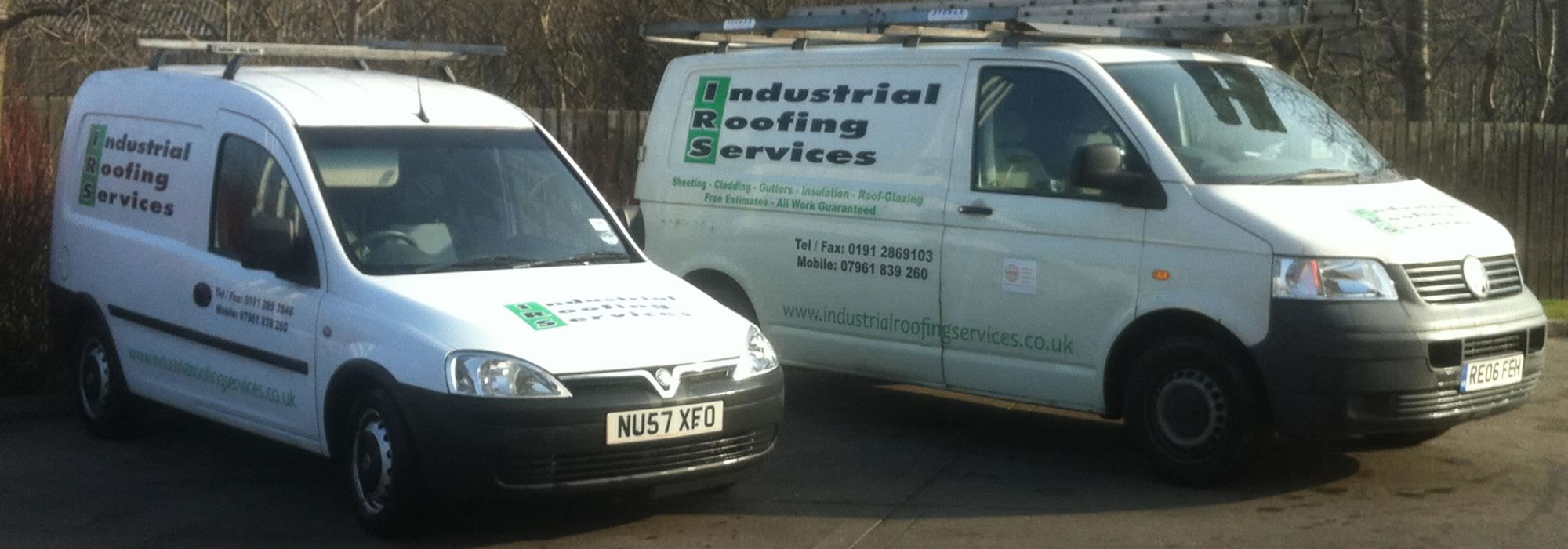
If you need help scoping works, comparing options, or setting up a maintenance plan, you can contact Industrial Roofing Services to discuss survey-led recommendations and delivery approach.
Summary
Choose roof “sheeting” by matching roof form and risk profile to a complete system: metal systems for many pitched/low-pitch industrial roofs, fibre cement where its constraints can be safely managed, and bituminous membranes for flat/low-slope roofs. In all cases, drainage and detailing at interfaces are the usual make-or-break items.
Lock safety and governance into your approach: treat roofs as fragile until confirmed non-fragile, ensure competent access and safe systems of work, and procure using a clear schedule that forces comparable, evidence-based proposals.
Frequently Asked Questions
Is “metal roof sheeting” automatically insulated?
No. Insulation performance depends on the full roof build-up (liner, insulation layer, vapour control, airtightness and detailing). Metal is typically one component of a system.
Is fibre cement safe to walk on?
You should not assume so. HSE guidance advises treating roofs as fragile until a competent person confirms they are non-fragile and identifies fibre-cement sheets and rooflights as likely fragile materials.
When should I use bitumen instead of sheets?
If your roof is flat or very low-slope, a membrane system (including bituminous membranes) is usually considered because it forms a continuously supported waterproof layer and can be detailed around penetrations and parapets.
What causes most industrial roof leaks?
Often, it is not the “main field” material. Leaks commonly originate at drainage points, flashings, rooflights, penetrations, and poorly maintained gutters/outlets.
Do Building Regulations matter in refurbishment?
They can. If roof works significantly change the roof as a thermal element, Building Regulations approval and insulation upgrades may be expected; check with Building Control and reference Approved Document L guidance where applicable.
What is the safest way to manage roof inspections?
Plan inspections using competent people and safe access arrangements, treating roofs as fragile unless confirmed otherwise. HSE guidance emphasises planning, appropriate equipment, and avoiding work at height where reasonably practicable.