An energy-efficient roof is a managed system, not a single product. The biggest gains usually come from stopping unwanted heat loss, keeping insulation dry, controlling air leakage and making sure drainage and details do not undermine the build-up.
Heat moves upward, so roofs are a key part of the building envelope. Energy Saving Trust notes that, in homes, an uninsulated roof accounts for a substantial share of heat loss. For commercial and public buildings, the principle still applies, but the actual proportion varies by use, HVAC strategy, airtightness and roof construction.
This updated guide focuses on practical, survey-led options for industrial, commercial and public buildings, with decision criteria, specification checks and a maintenance workflow you can implement across an estate.
What an Energy-Efficient Roof Does (and what it doesn’t)
An energy-efficient roof reduces unwanted heat loss in winter and helps manage solar heat gain in summer, without creating moisture, condensation or drainage problems. If an upgrade ignores ventilation, vapour control, interfaces or ponding water, you can end up with leaks, wet insulation and poor performance.
Where performance is usually won or lost
- Continuity of insulation: gaps at perimeters, kerbs, upstands and penetrations commonly create thermal weak points.
- Airtightness and uncontrolled air movement: warm air escaping through cracks carries moisture, increasing condensation risk within the build-up.
- Wet insulation: insulation that becomes damp can perform far worse than intended and can increase repair frequency.
- Drainage and ponding: blocked outlets and standing water accelerate defects and drive reactive callouts.
- Rooflights and plant interfaces: older rooflights, poorly formed kerbs and ad-hoc penetrations can dominate heat loss and leak risk.
Decision criteria: set the objective before choosing a “solution”
- When it fits: You have a clear driver (heat loss, overheating, condensation, leaks, end-of-life covering, compliance).
- When it doesn’t: You are selecting materials before confirming roof build-up, moisture condition, drainage performance and constraints.
- Risks to control: Creating trapped moisture, worsening condensation, voiding warranties, and overlooking safe access.
- What to check/specify: Survey findings, target outcomes, interfaces, drainage strategy, access method, and record-keeping plan.
Survey First: Objectives, Constraints & Compliance
Start with a roof condition survey and agree on what “energy-efficient” means for your building. Your best option depends on roof type, structural capacity, moisture condition, the level of disruption you can tolerate and how the building is ventilated/heated/cooled.
Minimum information to gather during a survey
- Roof form and system: flat, pitched, green roof area; membrane type (single-ply, bitumen, liquid), or profiled metal/panels.
- Build-up and insulation: warm roof/cold roof arrangement (where identifiable), thickness constraints, suspected wet areas, and vapour control layer presence.
- Drainage performance: outlet locations, gutter condition, overflow provision, and historic ponding areas.
- Defects and interfaces: rooflights, kerbs, upstands, parapets, movement joints, plant bases, service penetrations, edge details.
- Access and safety: fragile surfaces, rooflights, safe routes, edge protection needs, and exclusion zones below.
- Operational constraints: noise limits, dust-sensitive areas, shutdown windows, working hours, safeguarding/security needs.
- Risk registers: asbestos register (where relevant), fire strategy constraints, and known structural issues.
Working at height: governance and safe systems of work
Roof work is high risk and must be planned, supervised and carried out by competent people using suitable access and protection. HSE guidance stresses that roof work must be organised and planned so it is carried out safely, even for short tasks.
- Do not encourage “quick fixes” by untrained staff. Even brief tasks at height can result in serious falls.
- Require contractors to provide site-specific risk assessments and method statements (RAMS), including fragile roof/rooflight controls and rescue planning where relevant.
- Use permits to work where your site requires them (hot works, roof access, lifting operations, isolation of services).
Building Regulations energy context (England)
Many roof refurbishments and replacements interact with Building Regulations energy requirements. In England, Approved Document L Volume 2 gives guidance for buildings other than dwellings; for any notifiable work, engage your building control body early and document your compliance route.
If you operate outside England, confirm the relevant devolved regulations and guidance (Scotland, Wales and Northern Ireland have their own frameworks).
Choose Your Upgrade Route
Most estates take one of four routes: maintain, repair, refurbish (often an overlay), or replace. The right choice is usually the one that fixes the root cause (moisture, detailing, drainage, end-of-life) while delivering the energy outcome you actually need.
| Route |
When it fits |
Key checks |
Common pitfalls |
| Maintain |
Covering is serviceable; issues are minor and localised. |
Drainage, rooflight seals, small splits, fixings, gutters, housekeeping. |
Ignoring recurring ponding or repeated patch repairs in the same zones. |
| Repair |
Known defects are isolated; the underlying build-up is broadly sound. |
Moisture spread, interface integrity, compatibility of repair materials. |
Repairing the surface without addressing wet insulation or failed details. |
| Refurbish/overlay |
You need better thermal performance with controlled disruption. |
Structural capacity, trapped moisture risk, falls/drainage improvements, and warranty route. |
Overlaying onto wet substrates or burying defective outlets/kerbs. |
| Replace |
End-of-life covering, widespread moisture/defects; repeated leaks. |
Temporary weathering plan, safe access, phasing, interfaces and plant strategy. |
“Like-for-like” replacement that recreates the same thermal bridges and drainage problems. |
Decision criteria: repair vs refurbish vs replace
- When it fits: You can evidence condition (survey + moisture assessment) and align works to your risk and budget profile.
- When it doesn’t: You are deciding on cost alone without confirming water ingress pathways and substrate condition.
- Risks to control: Trapped moisture, incompatible materials, missed interface failures, and unsafe access during work.
- What to check/specify: Survey scope, sampling approach (where appropriate), drainage upgrades, detailing drawings, warranty/O&M deliverables.
Option: Metal Sheet & Insulated Panel Roofs
Metal sheet and insulated panel roofs can be energy-efficient when insulation continuity, airtightness and condensation control are designed in – especially at laps, fixings, rooflights and junctions. Simply changing external sheets rarely improves energy performance unless the build-up and interfaces are upgraded at the same time.
Common upgrade approaches
- Over-cladding / over-sheeting: add a new external layer, typically alongside insulation upgrades and new flashings where practical.
- Strip and re-sheet: remove defective sheets and rebuild with a new insulation strategy and improved junction details.
- Targeted interface upgrades: focus on rooflights, gutters, penetrations and perimeter details that are driving defects.
Decision criteria: metal sheet / cladding upgrades
- When it fits: Large-span industrial roofs where refurbishment can be phased and where condensation/leaks are driven by laps, rooflights, fixings or ageing coatings.
- When it doesn’t: Structural issues, widespread substrate failure, or heavy corrosion where fixings and purlins are compromised.
- Risks to control: Condensation from poor vapour control, wind uplift at edges, water ingress at laps/flashings, and unsafe work over fragile areas.
- What to check/specify: Insulation/vapour control approach, rooflight kerb details, gutter and outlet renewal, penetrations strategy, and a clear inspection/maintenance plan.
For service-led support on profiled metal systems, see sheet and cladding roofing services and ensure your scope includes insulation, junctions and drainage rather than sheet replacement alone.
Option: Flat Roof Systems with Thermal Upgrades
Flat roofs become more energy-efficient when thermal upgrades are continuous, and moisture risk is controlled. The system type matters less than the quality of design and detailing around perimeters, penetrations, rooflights and outlets.
Systems you may encounter in commercial buildings
- Built-up bitumen (BUR): multi-layer systems with robust detailing potential when designed correctly.
- Single-ply membranes: lightweight systems that rely on correct welding/seaming and edge restraint.
- Liquid-applied waterproofing: useful where complex details make sheet materials difficult, but still dependent on substrate prep and correct reinforcement.
What actually changes thermal performance on a flat roof
- Insulation strategy: continuity at upstands, perimeters and kerbs; avoidance of compression and gaps.
- Vapour control and airtightness: correct placement and continuity of vapour control layers and air barriers (where required by design).
- Wet areas addressed: moisture-damaged zones removed or remediated rather than covered over.
- Drainage improved: outlets and overflows working, gutters cleared, recurring ponding addressed.
Decision criteria: flat roof refurbishment (overlay) vs replacement
- When it fits: You can evidence a dry, structurally sound deck and build-up, and you need disruption controlled through phasing.
- When it doesn’t: Widespread trapped moisture, repeated leaks with unclear pathways, or unknown build-up condition with no sampling.
- Risks to control: Trapping moisture, creating condensation within the build-up, and burying defective details/outlets.
- What to check/specify: Survey plus moisture approach, detailing drawings, rooflight/plant interfaces, drainage and overflow strategy, and handover documentation.
If you’re considering built-up bitumen or multi-layer flat systems, see built-up roofing services and ensure your proposal includes insulation, falls/drainage and interface detailing as part of the design.
Option: Reflective Finishes and “Cool Roofs”
Reflective finishes (“cool roofs”) can help reduce solar heat gain and support summer comfort, particularly where overheating is a concern. They are not a substitute for insulation, airtightness or drainage, and the benefit depends on building use, roof condition and local constraints.
Where cool roofs commonly help
- Buildings experiencing overheating, especially with high internal gains or limited ability to increase ventilation.
- Large roof areas with limited shading.
- Projects where you want a relatively lightweight retrofit measure alongside maintenance/refurbishment.
Where they may be a poor fit
- Roofs with persistent ponding, failing waterproofing, or poor drainage (fix the root cause first).
- Sites where glare could create safety issues (neighbours, drivers, airside/rail corridors) without mitigation.
- Where overspray, weather windows or access restrictions make coating quality hard to control.
Decision criteria: reflective coatings / cool roof overlays
- When it fits: Overheating risk is a recognised problem, and the existing roof is suitable for preparation and coating/overlay work.
- When it doesn’t: The roof is already failing in waterproofing, or you cannot manage surface preparation, detailing and maintenance.
- Risks to control: Poor adhesion from inadequate prep, coating damage from traffic/plant, blocked drainage, and glare/overspray issues.
- What to check/specify: Substrate condition, prep method, detailing at upstands/penetrations, walkways for maintenance routes, and cleaning/inspection plan.
For the public-sector context on cool roof retrofits, London’s Roofs Designed to Cool report page provides a policy/evidence overview. Keep project outcomes conditional and confirm performance via your design team and contractor.
Option: Green Roofs and Biosolar Roofs
Green roofs can support comfort and resilience goals and may help manage surface water and local microclimate, but they add complexity. They require structural checks, a robust waterproofing strategy, safe access planning and an ongoing maintenance commitment.
Key considerations before you choose a green roof
- Structure and loading: confirm the roof can accommodate the intended build-up (including saturated conditions) and maintenance access.
- Waterproofing and root resistance: treat waterproofing as a specialist design element; do not assume “green roof” layers solve water ingress.
- Drainage and outlets: ensure access for inspection/clearing; specify protection so outlets are not buried or inaccessible.
- Fire and wind uplift: confirm system testing/fitness for purpose and include fire strategy interfaces and maintenance controls.
- Maintenance and irrigation: establish responsibilities, visit schedule and establishment period requirements.
Decision criteria: green roofs
- When it fits: You have the structural capacity, governance and budget to maintain the system long-term, and you want resilience/biodiversity benefits alongside comfort goals.
- When it doesn’t: You cannot guarantee maintenance access, you have unresolved leak history, or drainage is already unreliable.
- Risks to control: Hidden defects under build-up, blocked outlets, wind uplift at perimeters, and unsafe access for maintenance.
- What to check/specify: Waterproofing design responsibility, access routes, outlet/inspection points, vegetation strategy, and a written maintenance plan.
Use recognised green roof guidance such as the Green Roof Organisation’s materials (and note the scope limits of older versions). Start with the GRO Code (2021 PDF) and ensure your waterproofing/drainage design is handled explicitly by competent professionals.
Details that Protect Performance
Most energy performance and leak failures happen at details: drainage points, roof edges, rooflights, kerbs and penetrations. Your specification should treat these as first-class items with drawings, materials and inspection points—not as “contractor to make good”.
Drainage: outlets, gutters, overflows and ponding
- Keep water moving: blocked outlets and gutters are a leading trigger for water ingress, accelerated ageing and internal disruption.
- Specify access: make sure outlets, gutters and overflows can be safely accessed for clearing and inspection.
- Plan for storms: include trigger-event inspections after severe weather and after works that introduce debris (plant installs, façade works).
Penetrations and interfaces
- Upstands and kerbs: confirm heights, terminations and compatibility with the waterproofing system.
- Parapets and edges: ensure coping/edge restraint details are robust and maintainable.
- Plant and services: route penetrations through designed zones; avoid ad-hoc core drilling and “temporary” sealant fixes.
- Rooflights: treat as both a leak risk and a thermal weak point; include kerb detailing, seals and replacement strategy where required.
Moisture and condensation risk
- Don’t trap moisture: overlays and added insulation must consider how vapour moves and where it could condense.
- Keep insulation dry: a “warm” build-up typically aims to keep the deck warmer and reduce condensation risk, but it must be designed correctly for the specific building.
- Coordinate with ventilation: roof works can change airtightness; coordinate with HVAC/ventilation so indoor humidity is controlled.
| Specification / Schedule: “Energy-Efficiency Critical Details” Checklist |
What to specify or verify |
Evidence to request at handover |
| Roof build-up |
System type, insulation continuity plan, vapour control/air barrier responsibility, compatibility between layers. |
Build-up drawings, product data, and installation photos at key stages. |
| Perimeters & edges |
Edge restraint, parapet/coping details, termination method, allowance for movement. |
Detail drawings, QA sign-off notes, and photo set. |
| Drainage |
Outlet and overflow locations, access for cleaning, gutter renewal scope, and known ponding mitigation plan. |
Outlet/gutter inventory, access points marked on plan, maintenance instructions. |
| Penetrations & plant |
Standardised kerbs, penetration zones, flashing method, and walkway routing to reduce damage. |
As-built penetration schedule, updated roof plan, and photo records. |
| Rooflights |
Condition assessment, replacement vs reseal decision, kerb and interface detailing, safe access around fragile zones. |
Rooflight schedule, warranty information, and fragile roof plan (where applicable). |
| Access & safety |
Safe access route, fall protection approach, fragile surface controls, signage, and future maintenance considerations. |
Access/fragile roof plan, O&M safety notes, permit requirements. |
Maintenance, Inspection Cadence & Warranty Protection
Energy performance is protected by routine roof care: keep drainage clear, keep details intact and record condition before defects become failures. A typical baseline is planned inspection at least annually, with additional checks after severe weather, adjusted to roof type, exposure and operational risk.
Risk-based maintenance schedule framework
| Asset / Roof type |
Routine tasks (low disruption) |
Planned inspection focus |
Trigger events for extra checks |
| Flat roofs (membrane / BUR / liquid) |
Clear outlets and gutters; remove debris; keep access routes defined. |
Seams/laps, upstands, penetrations, rooflights, ponding zones, edge details. |
High winds, heavy rainfall, snow/ice, after rooftop plant works. |
| Pitched roofs (metal sheets/panels) |
Gutter and valley clearing; check obvious loose flashings from safe vantage points. |
Fixings, laps, corrosion points, rooflight interfaces, ridge/verge details. |
Storms, wind-driven rain events, after cladding/plant modifications. |
| Cool roof coatings / reflective finishes |
Keep surfaces clean where safe and practical; protect from traffic damage with walkways. |
Adhesion defects, mechanical damage, coating wear at routes and around the plant. |
After maintenance traffic spikes, overspray/contamination incidents, and extreme heat events. |
| Green roofs |
Vegetation checks, remove invasive species/litter, check irrigation (if present). |
Outlet protection zones, edges/fire breaks (as designed), membrane inspection points. |
Establishment period, drought spells, severe winds, and after contractor visits. |
| All roofs: drainage assets |
Outlet baskets/guards, gutters, downpipes, and overflows kept clear. |
Blockage history, access constraints, signs of backing-up or staining. |
Leaf fall season, storms, and after nearby construction/roof works. |
Roof inspection checklist (what to look for)
- Water management: standing water, blocked outlets, silt in gutters, staining at parapets and downpipes.
- Waterproofing condition: splits, blisters, open seams, punctures, degraded coatings, and failed laps.
- Edges and upstands: loose terminations, cracks at corners, damaged copings, sealant failures.
- Penetrations and plant: damaged flashings, movement at kerbs, ad-hoc penetrations, and missing collars.
- Rooflights and fragile areas: cracked or crazed rooflights, failed seals, missing protection and unsafe routes.
- Signs of moisture: internal staining, odours, condensation patterns, mould-prone zones, wet insulation indicators (where investigated).
- Housekeeping: debris, stored items, unprotected foot traffic routes, trip hazards.
Inspection reporting template (copy into your CAFM or spreadsheet)
| Field |
What to record |
| Roof area ID |
Plan reference, elevation/zone, and access point used |
| Date/weather |
Date, recent weather context (e.g. heavy rainfall), surface condition |
| Inspector |
Name, role/company, competence evidence if required by policy |
| Safety notes |
Fragile zones, edge protection status, safe route used, any access restrictions |
| Findings |
Defect description, location, suspected cause (drainage/detail/impact), photos |
| Risk rating |
Operational risk (leak risk, safety risk), prioritisation category |
| Actions |
Immediate actions, planned repairs, recommended survey scope, and the responsible person |
| Warranty/compliance |
Warranty constraints, manufacturer notification needed, building control or fire advisor liaison needed |
| Close-out |
Completion date, evidence attached, sign-off |
Escalation rules: when to call a surveyor/contractor urgently
- Active leak affecting electrics, critical operations, or occupied areas.
- Suspected structural distress (noticeable sagging, cracking, unexpected movement) or repeated ponding in the same locations.
- Damaged rooflight / fragile surface exposure creating fall-through risk.
- Loose sheets, flashings or edge details after high winds (risk of detachment).
- Blocked outlets/overflows are causing water to back up, especially ahead of forecast storms.
- Unknown penetrations or recent third-party works on the roof without agreed detailing/warranty checks.
- Any task requiring roof access by untrained staff where safe systems of work cannot be guaranteed.
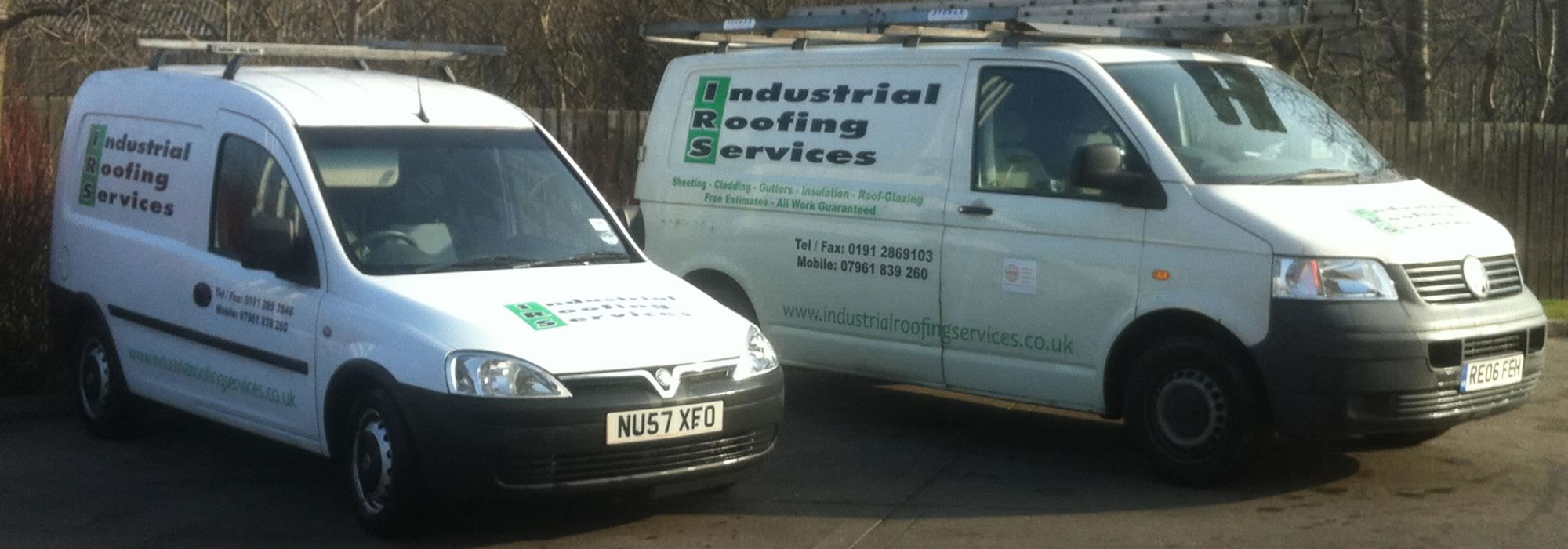
If you need survey-led advice, refurbishment planning or planned maintenance support, you can start via Industrial Roofing Services (NE) Ltd and request a scope that covers build-up, drainage and interfaces (not just surface repairs).
How to Get This Done
To get the right outcome, treat roof energy-efficiency work as a controlled service project: define the objective, survey properly, specify critical details and lock in maintenance. This section sets out what to gather, what to demand in proposals, and what to capture in an SLA.
What to gather before contacting contractors
- Roof plan(s): zones, access points, known fragile areas, locations of rooflights, plant and outlets.
- Defect history: leak log, callout records, photos, internal ceiling stain map, “repeat offender” areas.
- Building constraints: working hours, sensitive areas (food, healthcare, labs), noise/dust rules, security/safeguarding.
- Risk documents: asbestos register (if applicable), site rules, permit requirements, fire strategy constraints.
- Objective statement: heat loss reduction, overheating mitigation, condensation control, lifecycle reliability, or a combination.
- Future changes: planned rooftop plant, PV, extensions, façade works, or reconfiguration that may affect penetrations and routes.
What a good quotation/proposal should include
- Survey-led scope: what was inspected, what could not be verified, and what assumptions were made.
- System description: proposed build-up, how insulation continuity is achieved, and how vapour/air control is handled.
- Detail drawings: perimeters, upstands, outlets/overflows, rooflights and typical penetrations.
- Drainage plan: what is being renewed/cleared/modified, and how access for future maintenance is ensured.
- Interface responsibility matrix: who owns rooflight replacement, plant plinths, builder’s works, M&E penetrations and fire stopping.
- Programme and phasing: working hours, temporary weathering approach, and how disruption is controlled.
- Quality assurance: hold points for inspection, photo records, testing/checks, and handover pack contents.
- H&S deliverables: RAMS, access method, edge protection strategy, fragile roof controls, and lifting plans where needed.
- Warranty route: what actions could invalidate warranties and what records must be retained.
What to include in a maintenance contract / SLA
- Inspection cadence: baseline planned inspections (at least annually as a starting point) plus trigger-event attendance after severe weather.
- Drainage servicing: gutter/outlet clearing scope, seasonal adjustments and access method.
- Response times: emergency leak response vs planned defects, including safe access constraints.
- Reporting standard: photos, roof zone mapping, defect priority rating, and close-out evidence.
- Controls for third-party works: permit rules for penetrations and roof access, and sign-off requirements.
- Safety governance: competence requirements, induction/site rules, exclusion zones, and fragile roof plans.
What records to keep (for compliance and warranty support)
- Survey reports, drawings, specifications and change notes.
- Handover pack: as-built roof plan, detail drawings, product data, warranties, maintenance instructions.
- Inspection reports and photo sets (date-stamped where practical), leak logs and repair records.
- Permits to work, RAMS, and contractor competence evidence for higher-risk tasks.
Summary
The most reliable energy-efficiency gains come from controlling heat flow and moisture—not from chasing a single “miracle” material. Prioritise a survey-led approach, fix drainage and details, and make insulation/airtightness continuous around the whole roof perimeter and every penetration.
- Start with roof condition and moisture/drainage reality, not assumptions.
- Specify interfaces (rooflights, kerbs, penetrations, outlets) as critical elements.
- Use cool roof or green roof options when they fit your building objectives and maintenance capacity.
- Protect performance with a planned inspection and record-keeping workflow.
Frequently Asked Questions
Do I need to replace the whole roof to improve energy efficiency?
Not always. Some buildings benefit from refurbishment or targeted upgrades (insulation continuity, rooflights, drainage and interfaces). A survey should determine whether the overlay is suitable or whether replacement is the lower-risk option.
Is a reflective “cool roof” always a good idea in the UK?
No. Reflective finishes can help manage solar gain and overheating, but outcomes depend on building use, existing insulation, ventilation strategy, roof condition and local glare/maintenance constraints.
Will a green roof automatically improve insulation?
Green roofs can support comfort and resilience goals, but they add complexity and do not remove the need for a properly designed waterproofing and insulation strategy. Maintenance and safe access are essential.
How often should we inspect commercial roofs?
A common baseline is at least an annual planned inspection plus additional checks after severe weather, adjusted to roof type, access risk and operational criticality. Flat roofs and complex drainage typically need closer attention.
What usually causes repeated leaks after “repairs”?
Recurring leaks often come from missed root causes: blocked drainage, ponding zones, wet insulation, failed details at rooflights/penetrations, or incompatible repair materials. A structured survey and defect mapping help stop repeat callouts.
Can in-house teams do minor roof tasks?
Be cautious. Roof work is work at height and must follow safe systems of work. Many “minor” tasks still involve fall risk, fragile surfaces and edge hazards; use competent contractors where risk cannot be controlled.
Where can I get help specifying and delivering the work?
Use a survey-led contractor proposal and insist on detailed drawings, drainage scope and a maintenance plan. If you’re seeking a specialist contractor in the North East, start with Industrial Roofing Services (NE) Ltd and request a roof survey and options appraisal.